
The bubbles
The bubbles you see are hydrogen leaving the water. What you can see is what you do not get.
Learn
Hydrogen tablets are effervescent magnesium tablets that react with water and form hydrogen gas right in the bottle. They are the cheapest way to try hydrogen water. How much hydrogen you actually drink depends mostly on how you use them: in a closed, almost full bottle the level is high, in an open glass much of the hydrogen bubbles away before you drink.
The chemistry
Magnesium reacts with water to form magnesium hydroxide and hydrogen gas. In theory, one gram of magnesium gives about 80 milligrams of hydrogen. Most tablets also contain organic acids that speed up the reaction and dissolve what is left. That is why the water turns clear and can taste slightly tart.
The bubbles you see are hydrogen leaving the water. What you can see is what you do not get.
The magnesium stays in the water as a salt. You drink it, so it counts towards your magnesium intake.
Besides magnesium and acids there may be flavouring, sweeteners or fillers. Read the ingredients list.
The tablets are usually sold as food supplements. There are no authorised health claims for hydrogen in the EU, so ignore promises of effects.
How much hydrogen
Makers often state milligrams of hydrogen per tablet. That figure almost always refers to hydrogen generated. At room temperature and normal air pressure, water holds only about 1.6 milligrams of hydrogen per litre, so how much stays depends on the container and the time.
In practice
Use a bottle with a tight cap, ideally glass or thick plastic, and fill it almost to the top with cold water.
Drop in the tablet, screw on the cap and let it dissolve fully, as long as the pack says.
Turn the bottle gently a few times, open it and drink at once. To know the level, measure with reagent drops.
Before you buy
Comparison
After tablets
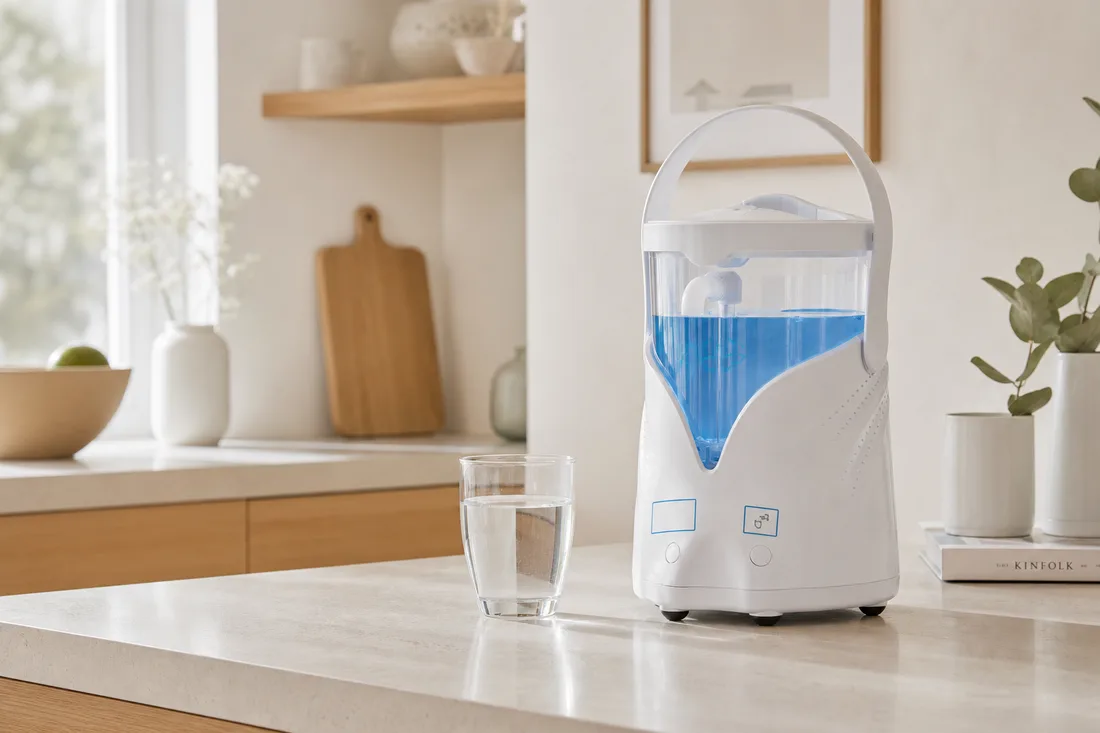
We do not sell hydrogen tablets. Many people start with tablets and then want to stop buying more. Lita Aqua makes fresh hydrogen water from drinking water in 20 minutes, with no magnesium or flavourings.
If you would rather inhale hydrogen than drink it, the Lita Air hydrogen inhaler is the alternative. We go through the differences in hydrogen inhalation vs hydrogen water.
Questions and answers
Hydrogen tablets, often called H2 tablets, are effervescent tablets containing magnesium. When the tablet dissolves, the magnesium reacts with the water and forms hydrogen gas, part of which dissolves in the water. What remains is a magnesium salt that you drink with it.
They do form hydrogen, and that can be measured. How much stays in the water depends on how you use them: in a closed, almost full bottle the level is higher than in an open glass. Whether hydrogen water itself has any health effect is not established, whatever the format.
Makers often state milligrams of hydrogen per tablet. That figure usually refers to hydrogen generated, not hydrogen that stays in your glass. At normal pressure, water holds about 1.6 milligrams of hydrogen per litre, so the rest bubbles away if the bottle is open.
The hydrogen itself has not caused serious side effects in published studies. The tablets add magnesium, and a lot of magnesium can loosen the stomach. Count the magnesium if you already take supplements, and ask your doctor first if you have kidney disease or take medication.
Hydrogen tablets are sold mainly in health food shops and online, usually as food supplements. The range varies. Read the ingredients and ask for measurement data wherever you buy. We do not sell tablets.
Tablets are cheap to start with and easy to carry. A dispenser costs more up front, but makes fresh hydrogen water from drinking water with no additives, and works out cheaper per glass if you drink it every day.
Next step
Free shipping within Sweden, an invoice with your order confirmation and a 30-day return right. Prefer to try it in Stockholm first? Join the list for a guided trial session.